Hair styling training
10
Affordable Hair Cutting & Stylist Courses: Fees for Men & Women
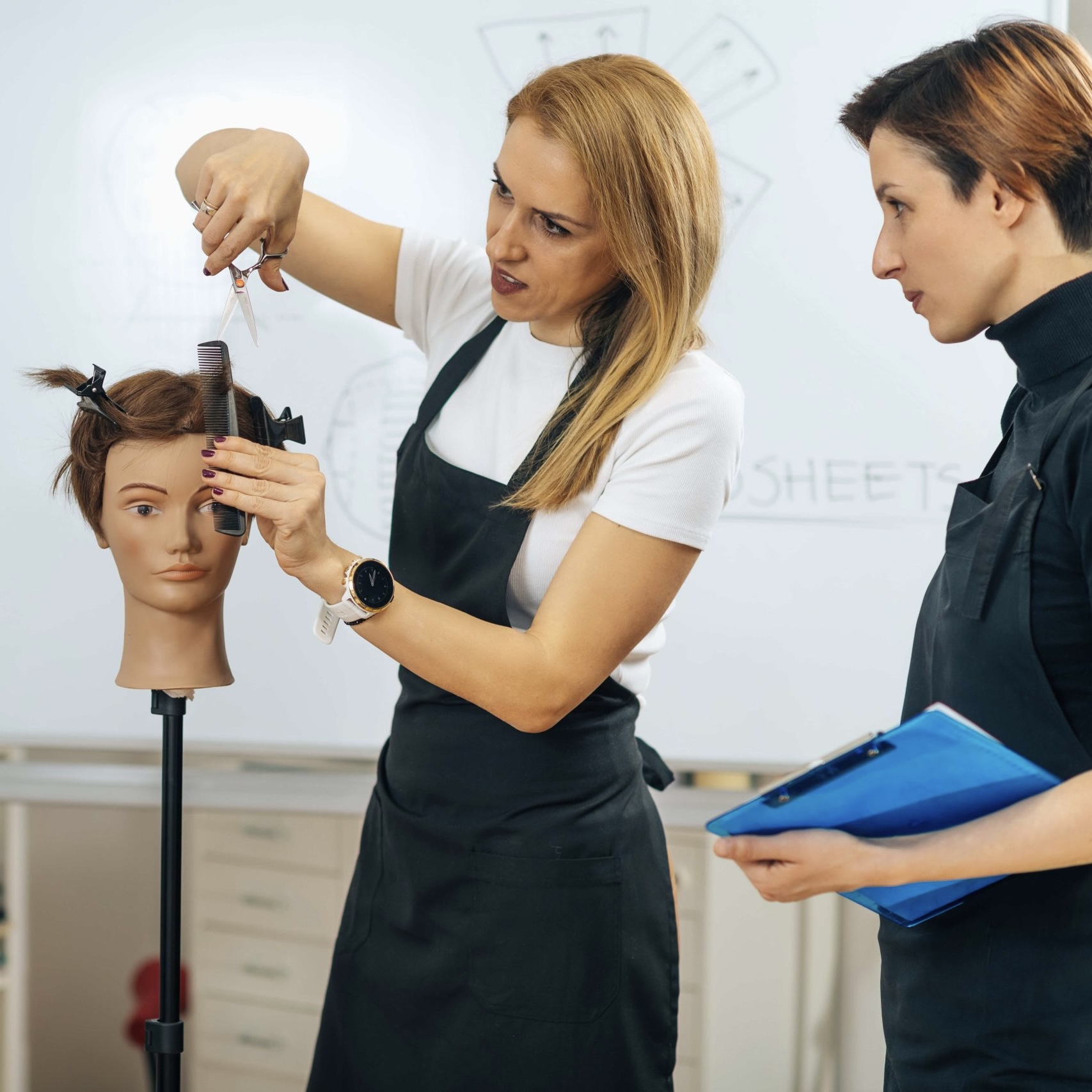
Hair styling training involves both theoretical learning and hands-on practice, covering fundamental techniques like cutting, coloring, and styling, as well as treatments and client communication skills. You can expect to work with mannequins and, eventually, real clients in a supervised environment, with an emphasis on safety, hygiene, and staying current with industry trends. The goal is to build foundational skills, develop creativity, gain practical experience, and learn business basics to prepare you for a professional license and career.
Core Skills & Techniques
Cutting: Learning fundamental techniques for haircutting, layering, and texturizing different hair lengths and types.
Coloring: Understanding color theory, mixing, applying hair color, and performing techniques like highlighting.
Styling: Mastering techniques for blow-drying, curling, updo's, and styling for special occasions like weddings.
Treatments: Learning about deep conditioning, hair spas, and treatments for hair health and common issues.
Chemical Services: Training in chemical relaxers and permanent waving, including hair analysis and application techniques.
Practical Experience
Mannequins: You'll begin by practicing techniques on mannequin heads, often mounted on adjustable stands to simulate a real working environment.
Models: Some programs involve working on models with real hair to refine your skills before working with paying clients.
Salon Practice: You'll gain hands-on experience by performing services on actual clients under the supervision of instructors or senior stylists.
Professional Development
Client Consultation: Learning how to communicate effectively with clients to understand their needs and preferences.
Salon Etiquette: Developing professionalism, including greeting clients, maintaining a clean and organized workstation, and managing appointments.
Business Skills: Courses often include modules on client management, salon operations, finances, and marketing to help you succeed in the industry.
Licensing: Training includes preparation for the state licensure examination required to work as a professional hairstylist.
The Learning Environment
Structured Curriculum: Courses provide a structured path from foundational theory to practical application.
Industry Trends: You'll learn about new trends, tools, and techniques to keep your skills up-to-date in the evolving beauty industry.
Networking: The training period is an excellent opportunity to build a professional network with instructors, classmates, and clients.